
Brandon Boggan has been practicing orthodontics full-time since 1998. He is the Chief Smile Engineer and the CFO (Chief Fun Officer) at Ortho South in Pelham and Calera, Alabama. His love for people, marketing, and helping other orthodontists grow their practice led him to start a brand and website development and digital marketing company called Onboard Marketing Group. You can find Brandon on LinkedIn, OrthoSouth.com, or OnboardMG.com.
Sleep Apnea and Your Jaw: What Your Orthodontist Wants You to Know

By Dr. Brandon Boggan
Share This

Most people associate sleep apnea with snoring, obesity, or aging. Very few connect it to something they actually see every day: the shape of their jaw.
That connection is real, it's well-documented, and it's exactly where an orthodontist can make a life-changing difference.
At Ortho South, we treat more than teeth and bite alignment. We treat the entire architecture of your face - and that architecture directly determines how much air you breathe when you sleep. This post explains the jaw-airway relationship, what warning signs to watch for, and what modern airway-focused orthodontics can do for both children and adults.
83.7M
adults in the U.S. have obstructive sleep apnea (2024)
Respiratory Medicine, 2025 80%
of those cases go undiagnosed
American Academy of Sleep Medicine (AASM)What Is Sleep Apnea - and Why Does It Matter?
Obstructive sleep apnea (OSA) is a condition in which the upper airway collapses partially or completely during sleep, causing repeated breathing interruptions. Each episode drops oxygen levels in your blood, forces your brain to briefly wake you, and prevents you from reaching the deep, restorative stages of sleep.
A 2025 study published in Respiratory Medicine estimated that 83.7 million U.S. adults currently have OSA - roughly 1 in 3 adults over age 20. The American Academy of Sleep Medicine (AASM) estimates that 80% of those cases remain undiagnosed, making sleep apnea one of the most widespread silent health crises in the country.
Untreated OSA is linked to a long list of serious health consequences:
- High blood pressure and increased cardiovascular risk
- Greater likelihood of heart attack and stroke
- Type 2 diabetes and metabolic disruption
- Chronic daytime fatigue and impaired concentration
- Depression, anxiety, and mood instability
- Significantly higher risk of motor vehicle and workplace accidents
The economic toll is equally staggering. The AASM reports that undiagnosed sleep apnea costs the U.S. approximately $149.6 billion annually in lost productivity, accidents, and increased healthcare utilization.
The Part Most Doctors Miss: Your Jaw Is Your Airway
When most people think of sleep apnea causes, they think of obesity or aging. Those are real contributors - but for a significant percentage of patients, the primary root cause is structural: the size, position, and shape of the jaw.
Here's why it matters:
Your upper airway - the passage air travels through during sleep - is bordered on all sides by soft tissue and bone. The lower jaw (mandible) and the roof of the mouth (palate) form the physical boundaries of that airway. When the jaw is underdeveloped, set too far back, or the palate is too narrow, there is simply less room for the airway to function. During sleep, when muscle tone decreases, that already-cramped space collapses.
74%
of OSA patients have identifiable craniofacial abnormalities
Journal of the American Academy of Dental Sleep MedicineResearch published in the Journal of the American Academy of Dental Sleep Medicine found that three in four OSA patients show jaw and facial structural factors - including narrow palate, recessed lower jaw, or increased facial height - that directly reduce airway volume.
The Most Common Structural Contributors to Sleep Apnea
Mandibular Retrognathia (Recessed Lower Jaw)
When the lower jaw sits further back than it should, the tongue - which is anchored to the lower jaw - is pulled back with it. During sleep, this positions the tongue directly over the airway opening, causing partial or complete obstruction. Research consistently identifies mandibular retrognathia as one of the strongest structural predictors of obstructive sleep apnea. This is one of the structural patterns we assess during every orthodontic consultation at Ortho South.
Narrow Maxilla (Narrow Upper Jaw / Palate)
A narrow upper jaw means a narrower nasal passage. Patients with a constricted palate are forced to breathe through their mouths rather than their noses, and mouth breathing significantly increases the risk of airway collapse during sleep. This pattern frequently begins in childhood and is one of the most treatable craniofacial risk factors for sleep apnea. Our early orthodontic treatment program is specifically designed to address this window of opportunity.
Overbite and Skeletal Class II Malocclusion
A deep overbite - where the upper front teeth significantly overlap the lower - is often accompanied by a lower jaw that is positioned too far back. This skeletal pattern (Class II malocclusion) is associated with reduced airway dimensions and elevated OSA risk. It's also among the most common bite problems our orthodontists treat every day.
Increased Vertical Facial Height (Long Face Syndrome)
Patients with a longer, more vertical facial pattern tend to breathe through their mouths chronically, which over time promotes downward and backward jaw rotation. This creates a self-reinforcing cycle: mouth breathing worsens jaw development, and poor jaw development worsens mouth breathing - all of which compounds airway risk.
Warning Signs Your Airway May Be Compromised
Sleep apnea often hides in plain sight. The symptoms are real and disruptive, but they're frequently attributed to stress, aging, or simply being busy. Here's what to watch for - in both adults and children.
Warning Signs in Adults
- Loud snoring, especially with gasping or choking sounds
- Waking up feeling unrefreshed even after 7-9 hours of sleep
- Chronic daytime fatigue or falling asleep during low-stimulation activities
- Morning headaches
- Difficulty concentrating or memory problems
- Waking frequently during the night
- High blood pressure that is difficult to control
- A bed partner who has observed pauses in your breathing
Warning Signs in Children - Often Overlooked
Pediatric sleep apnea affects 1-5% of children, and its symptoms look very different from those in adults. Because children don't always report poor sleep, the signs often show up as behavioral or developmental problems:
- Mouth breathing, especially during sleep
- Snoring or noisy breathing at night
- Restless sleep, frequent repositioning, or sleeping in unusual positions
- Bedwetting beyond the expected age
- Behavioral problems, hyperactivity, or a diagnosis of ADHD
- Poor academic performance or difficulty concentrating
- Slow growth or delayed development
- Crowded or narrow dental arches (often visible to parents)
- Dark circles under the eyes despite adequate sleep time
70%
of adults with sleep apnea snored as children
Journal of Dental Sleep MedicineResearch in the Journal of Dental Sleep Medicine found that up to 70% of adult sleep apnea patients showed signs of sleep-disordered breathing during childhood. Early orthodontic intervention may significantly reduce the risk of adult sleep apnea - and there's a limited window to act. The American Association of Orthodontists recommends every child receive an orthodontic evaluation by age 7, precisely because this window exists.
How an Orthodontist Evaluates Your Airway
When you come to Ortho South for an airway consultation, we're looking at considerably more than your teeth. Our evaluation is designed to identify the structural factors that may be contributing to - or putting you at risk for - sleep-disordered breathing.
Cephalometric X-Rays
A lateral cephalometric X-ray gives us a precise, measurable view of your jaw and skull relationship. We can identify retrognathia, facial height, airway dimensions, and hyoid bone position - all of which are clinically significant in sleep apnea risk assessment.
CBCT (Cone Beam CT) Imaging
When additional detail is needed, three-dimensional CBCT imaging allows us to visualize the airway in all dimensions. This technology is particularly valuable for evaluating the degree of airway narrowing and planning treatment.
Clinical Bite and Facial Pattern Assessment
We evaluate your bite classification, overjet, overbite, palatal width, tongue posture, and facial growth pattern - factors that collectively tell us how your jaw structure is influencing your airway.
Collaborative Screening
Ortho South works in coordination with sleep medicine specialists. If our evaluation suggests a significant risk for sleep apnea, we facilitate referrals for formal sleep testing and work alongside your sleep physician to develop an integrated treatment plan. Learn more about our locations in Pelham and Calera and the services we offer.
How Ortho South Treats the Jaw-Airway Connection
The good news: many of the structural factors that contribute to sleep apnea are directly treatable. At Ortho South, we offer a range of airway-focused interventions tailored to each patient's age, severity, and goals.
Early Intervention for Children (Phase 1 Orthodontics)
For growing children, this is where we can make the most dramatic and lasting impact. Between the ages of 7 and 10, the jaw is actively developing - and that developmental window is our opportunity to guide growth in a direction that supports a healthy airway. Our Phase 1 orthodontic treatment program uses palate expanders to gradually widen the upper jaw, creating more room for nasal breathing and reducing the crowding that drives mouth breathing. Phase 1 treatment can redirect jaw growth, improve tongue posture, and - according to emerging research - potentially prevent or significantly reduce sleep apnea risk in adulthood.
Airway-Focused Orthodontic Treatment
For teens and adults, comprehensive orthodontic treatment at Ortho South incorporates airway health as a core treatment objective - not an afterthought. Rather than simply straightening teeth, we consider how jaw positioning, arch width, and bite relationship affect the airway dimensions, and we sequence treatment accordingly.
Oral Appliance Therapy (Mandibular Advancement Devices)
For patients with diagnosed OSA who need a non-CPAP solution - or who use CPAP but want an alternative - our custom oral appliances are an effective, well-researched treatment option. These devices work by gently repositioning the lower jaw forward during sleep, which physically opens the airway and reduces apneic events.
Oral appliances are particularly effective for mild to moderate OSA and for patients with identifiable jaw-related contributors to their airway obstruction. Ortho South designs and fits these appliances with the same precision we apply to any custom orthodontic device.
Collaborative Care with Sleep Specialists
Ortho South does not operate in a silo. Sleep apnea is a medical condition that requires a coordinated care approach. We work closely with sleep medicine physicians in the Shelby County area to ensure that patients receive proper diagnosis (via sleep study), appropriate medical oversight, and orthodontic care that complements - not replaces - their overall sleep health treatment plan.
Why Early Action Is the Most Powerful Action
Whether you're a parent looking at a child who snores and breathes through their mouth, or an adult who has been tired for years without knowing why - time matters.
Untreated sleep apnea doesn't plateau. It tends to worsen with age, with weight changes, and with the gradual loss of muscle tone. The longer the airway is compromised during sleep, the greater the cumulative damage to cardiovascular and cognitive health.
For children, there is a developmental window that closes. The palate fuses in the mid-teens. Jaw growth completes in late adolescence. The orthodontic interventions that are simple, non-invasive, and highly effective at age 8 or 9 become significantly more complex - and sometimes require surgery - by age 25.
35%
projected increase in U.S. sleep apnea cases by 2050
Lancet Respiratory Medicine, 2025A 2025 Lancet Respiratory Medicine study projects 76.6 million Americans will have OSA by 2050 - a 35% rise driven by aging and increasing obesity rates. The time to act - especially for children - is now.
Frequently Asked Questions
Can an orthodontist diagnose sleep apnea?
No - sleep apnea is diagnosed through a formal sleep study interpreted by a sleep medicine physician. However, an orthodontist is uniquely qualified to identify the structural jaw and airway factors that contribute to OSA, facilitate appropriate referrals, and provide orthodontic treatments that address root causes.
My child snores. Should I take them to an orthodontist?
Snoring in children is not normal and is worth evaluating. An orthodontic consultation can assess whether jaw structure, palatal width, or bite pattern is contributing to nighttime breathing difficulties. If we identify concerns, we'll work alongside your pediatrician or ENT to develop an appropriate plan.
Is oral appliance therapy covered by insurance?
In many cases, yes - particularly when sleep apnea has been formally diagnosed and the oral appliance is prescribed as a medical treatment. Ortho South will work with you to understand your coverage and explore available options.
I already use a CPAP. Can orthodontics still help me?
Yes. Many CPAP users find the device uncomfortable and struggle with long-term adherence. Our oral appliance therapy can serve as an alternative or complement to CPAP depending on your severity. We'll coordinate with your sleep physician to determine the best integrated approach.
At what age should my child be evaluated for airway issues?
The American Association of Orthodontists recommends that every child receive an orthodontic evaluation by age 7. At that age, we can assess jaw development, palatal width, and early signs of airway compromise - and intervene during the window when treatment is most effective.
Ready to Breathe Better? Start Here.
Ortho South offers complimentary airway consultations for patients of all ages. If you or your child shows any of the warning signs in this post, our doctors and team are ready to help.
Clinical Sources & References
This post is grounded in peer-reviewed research and guidelines from leading sleep and orthodontic organizations. Key sources include:
- Sonmez I, et al. (2025). Unmasking Obstructive Sleep Apnea: Estimated Prevalence and Impact in the United States. Respiratory Medicine.
- Boers E, et al. (2025). Projecting the 30-Year Burden of Obstructive Sleep Apnea in the USA. Lancet Respiratory Medicine.
- American Academy of Sleep Medicine (AASM). National Indicator Report on Obstructive Sleep Apnea.
- Nishio C, Huynh N. (2016). Skeletal Malocclusion and Genetic Expression: An Evidence-Based Review. Journal of Dental Sleep Medicine.
- Role of Facial Pattern in Patients with Obstructive Sleep Apnea. Journal of the American Academy of Dental Sleep Medicine.
- StatPearls (2023). Retrognathia. National Library of Medicine.
- American Journal of Orthodontics and Dentofacial Orthopedics - Orthodontic upper jaw expansion and nasal breathing outcomes.
Share This

Compare permanent vs. removable retainers and learn which option may be right for your smile with expert guidance from Ortho South.

Learn what interproximal reduction (IPR) is, why orthodontists use it, and how this technique can help create space for better tooth alignment.
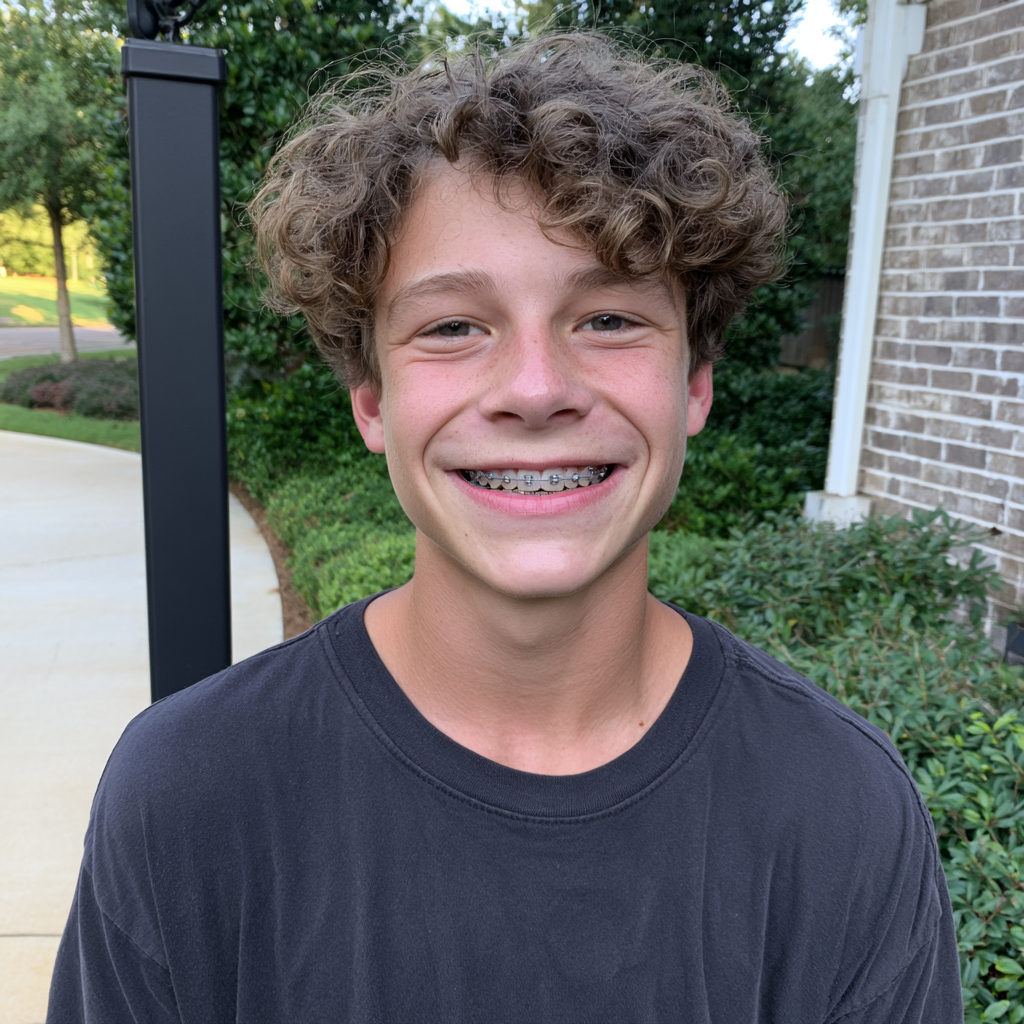
Learn whether a crossbite can be fixed and explore common questions about causes, treatment options, and timing with guidance from Ortho South.

Discover why teens love clear aligners at Ortho South and how they can confidently manage school, meals, activities, and daily smile care.

Learn how to prevent teeth staining with expert tips from Ortho South, including daily habits that help keep your smile bright and healthy.

Get ready for summer with braces or aligners using Ortho South’s top tips for travel, snacks, oral hygiene, and keeping treatment on track.

Learn how to brighten your smile after braces with Ortho South’s guide to teeth whitening success and stain prevention after orthodontic treatment.

Learn why braces are still the gold standard for complex smiles at Ortho South, including bite correction, braces vs aligners, and what to expect in an eval.

Learn what affects the cost of braces and Invisalign at Ortho South, from complexity and bite goals to technology, financing, and what’s included.

Ceramic braces at Ortho South offer a subtle, effective way to straighten teeth with clear brackets, color options, and pro tips for confident results.


